Introduction
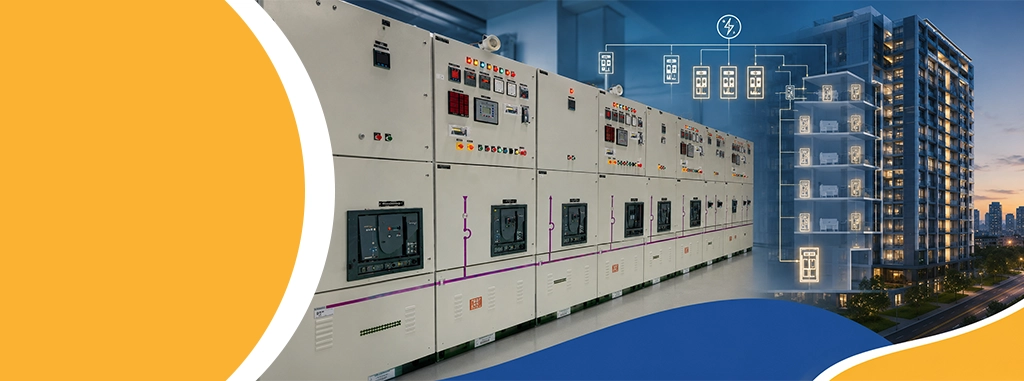
High-rise buildings frequently have major electrical issues such as power outages, unequal load distribution across floors, and circuit tripping. These problems are frequently caused by faulty planning of Power Distribution Boards inside the building’s electrical system, rather than poor equipment itself.
Modern high-rise buildings are extremely complicated, with several floors, huge HVAC loads, elevators, lighting systems, and emergency backup networks. Managing all of this with a poorly designed electrical layout can result in inefficiency, safety hazards, and excessive maintenance costs.
Proper planning for Power Distribution Boards ensures:
- Balanced load distribution across floors
- Safe and dependable operation of all electrical systems
- Reduced downtime and maintenance difficulties.
However, one of the most common queries asked by MEP designers and consultants is how many distribution boards a high-rise structure actually needs.
This blog provides a detailed explanation, including:
- How distribution boards are organized in high-rise constructions
- Key factors determining their number
- Best practices for developing a dependable electrical architecture
What Are Power Distribution Boards in High-Rise Electrical Systems?
Power Distribution Boards are electrical panels that receive power from a main source and distribute it safely across different circuits in a building. They act as control and protection points within an electrical system, ensuring electricity is delivered efficiently and safely to every floor and zone.
In high-rise electrical infrastructure, these boards are critical because they manage power distribution across multiple vertical levels, where load demand varies significantly.
Key Functions of Power Distribution Boards
- Distribute power across multiple floors and zones
- Provide circuit protection against overloads and faults
- Enable load management and isolation during maintenance or faults
Without properly designed distribution boards, a high-rise electrical system becomes unstable and difficult to manage.
Why High-Rise Buildings Need Multiple Distribution Boards
A single distribution board is never sufficient for a high-rise structure due to its complexity and load variation. Instead, multiple boards are required to ensure safe and efficient operation.
Vertical Load Distribution Challenges
Power must travel vertically across multiple floors, which increases the risk of voltage drops and uneven load distribution.
Distance and Voltage Drop Issues
Long cable runs from a single board can cause energy loss and reduced efficiency, especially in tall buildings.
Safety and Redundancy Requirements
Multiple Power Distribution Boards ensure that if one section fails, others continue functioning without affecting the entire building.
Floor-Wise Distribution Strategy
In most modern high-rise designs, each floor or group of floors is assigned a dedicated distribution board. This approach improves:
- Fault isolation
- Maintenance efficiency
- Load balancing
It also ensures that electrical issues on one floor do not impact the entire building.
Zoning for Load Management
High-rise buildings are often divided into zones such as:
- Residential or office floors
- Utility areas
- Basement and parking loads
- HVAC and mechanical zones
Zoning allows better control of electrical distribution and prevents overloading of any single system.
Key Factors That Determine the Number of Power Distribution Boards
The number of Power Distribution Boards required in a high-rise building depends on several technical and design-related factors.
Building Size and Number of Floors
The taller the building, the more distribution boards are required. Vertical segmentation ensures that power is efficiently delivered without overloading any system.
Total Electrical Load and Distribution Board Capacity Planning
Accurate load calculation is essential. Distribution board capacity planning ensures that each board can safely handle expected demand without frequent tripping or overheating.
Type of Electrical System Design
High-rise buildings may use either:
- Centralized systems (fewer large boards)
- Decentralized systems (multiple smaller boards across floors)
Decentralized systems are more common in modern projects due to better reliability and scalability.
Role of Low Voltage Switchgear
Low voltage switchgear applications are critical in managing and protecting electrical loads within buildings. They ensure safe distribution and isolation of circuits in case of faults.
Integration with Medium Voltage Switchgear Systems
In large high-rise developments, medium voltage switchgear systems are used at the incoming supply level, while low voltage systems handle internal distribution.
This integration ensures:
- Efficient power stepping from utility supply
- Safe distribution within the building
- Reliable system performance
Typical Distribution Board Layout in High-Rise Buildings
A well-designed high-rise electrical system follows a structured hierarchy.
Main Distribution Board (MDB)
- Located at the main power entry point
- Receives power from utility or transformer
- Acts as the primary control point for the entire building
Sub Distribution Boards (SDBs)
- Installed on individual floors or zones
- Receive power from MDB
- Distribute electricity to smaller circuits
Final Distribution Boards (FDBs)
- Installed closer to end-use areas
- Supply power to lighting, HVAC, sockets, and equipment
- Provide final level of circuit protection
Role of Type Tested Electrical Panels in High-Rise Projects
Type tested electrical panels are pre-tested systems that comply with international safety and performance standards.
They are essential because they ensure:
- Verified safety performance
- Reliable operation under load conditions
- Compliance with electrical standards
In high-rise infrastructure, using type-tested panels reduces risks and improves system reliability significantly.
How Electrical Panel Manufacturers Influence Distribution Planning
An experienced electrical panel manufacturer plays a key role in designing efficient electrical systems for high-rise projects.
They provide:
- Custom-built solutions based on load requirements
- Space-optimized panel designs
- Integration support for complex electrical systems
Choosing the right manufacturer ensures that the entire electrical architecture is safe, scalable, and efficient.
Step-by-Step Approach to Determining the Number of Distribution Boards
Step 1: Analyze Total Connected Load
Identify all electrical loads including lighting, HVAC, elevators, and equipment. Categorize them by floors and usage type.
Step 2: Divide Load by Floors and Zones
Distribute loads evenly across floors to avoid overloading any single system.
Step 3: Select Appropriate Low Voltage Switchgear Applications
Choose suitable low voltage switchgear applications that match load requirements and ensure system safety.
Step 4: Plan Distribution Hierarchy
Establish a structured system using Main Distribution Board Sub Distribution Board and Final Distribution Board This ensures proper power flow and system reliability
Step 5: Allow for Future Expansion
Always include spare capacity in Power Distribution Boards to accommodate future load increases or system upgrades.
Common Mistakes in Distribution Board Planning
- Using too few boards, leading to overload conditions
- Poor distribution board capacity planning
- Ignoring voltage drop across long vertical distances
- Improper integration of MV and LV systems
- Selecting incorrect switchgear for load conditions
Best Practices for High-Rise Electrical Infrastructure Design
To ensure a safe and efficient system:
- Perform accurate load calculations at design stage
- Use certified and type tested electrical panels
- Follow proper zoning and segmentation strategy
- Work with experienced electrical panel manufacturers
- Ensure compliance with electrical safety standards
Quick Checklist: How Many Power Distribution Boards Do You Need?
- Calculate total building load accurately
- Divide loads floor-wise and zone-wise
- Include MDB, SDB, and FDB hierarchy
- Use proper low voltage switchgear systems
- Plan redundancy and backup capacity
- Ensure compliance with standards and regulations
Conclusion
Planning the correct number of Power Distribution Boards is essential for the safety, efficiency, and long-term reliability of any high-rise building’s electrical system. Proper design ensures smooth power distribution across all floors while minimizing risks of overloads, failures, and downtime.
A well-structured high-rise electrical infrastructure supported by proper distribution board capacity planning, reliable switchgear systems, and collaboration with experienced manufacturers leads to:
- Improved operational efficiency
- Enhanced electrical safety
- Reduced maintenance and downtime
For MEP designers and building consultants, early-stage planning of electrical systems is critical. Engaging with experts and choosing high-quality components ensures the building remains future-ready, safe, and efficient for years to come.
FAQs
How many Power Distribution Boards are typically required in a high-rise building?
The number of Power Distribution Boards required depends on factors such as the building height, number of floors, electrical load, zoning strategy, and system design. Most high-rise buildings use a combination of Main Distribution Boards (MDBs), Sub Distribution Boards (SDBs), and Final Distribution Boards (FDBs) to ensure safe and efficient power distribution.
Are Power Distribution Boards installed on every floor of a high-rise building?
Yes, in many modern high-rise projects, dedicated Power Distribution Boards are installed on each floor or for a group of floors. This approach improves maintenance access, simplifies troubleshooting, and helps maintain balanced load distribution.
How do Power Distribution Boards help reduce electrical failures?
Properly designed Power Distribution Boards isolate faults to specific circuits or zones, preventing widespread outages. They also support balanced load distribution, reducing the risk of overheating, tripping, and equipment damage.
What is the difference between MDB, SDB, and FDB in a distribution system?
A Main Distribution Board (MDB) receives incoming power, Sub Distribution Boards (SDBs) distribute power to specific floors or zones, and Final Distribution Boards (FDBs) supply electricity directly to lighting, HVAC systems, and other end-use equipment. Together, these Power Distribution Boards create a structured and reliable electrical network.
Can Power Distribution Boards be expanded for future building requirements?
Yes. Most electrical consultants recommend including spare capacity in Power Distribution Boards to accommodate future equipment additions, increased occupancy, or system upgrades without requiring major infrastructure changes.
What are the common mistakes made when designing Power Distribution Boards for high-rise buildings?
Common mistakes include underestimating electrical loads, installing too few boards, ignoring voltage drop calculations, and failing to provide adequate redundancy. Proper planning of Power Distribution Boards helps avoid these issues.
Why should building developers invest in high-quality Power Distribution Boards?
High-quality Power Distribution Boards improve electrical safety, operational efficiency, and system reliability. They also reduce maintenance costs, support compliance with electrical standards, and ensure long-term performance in demanding high-rise environments.
What are the benefits of using type-tested Power Distribution Boards in high-rise projects?
Type-tested Power Distribution Boards are verified for performance, safety, and compliance with industry standards. They offer greater reliability under varying load conditions and help minimize operational risks.